About the Project

"I can't go back to yesterday because I was a different person then."

Lewis Carroll, Alice's Adventures in Wonderland
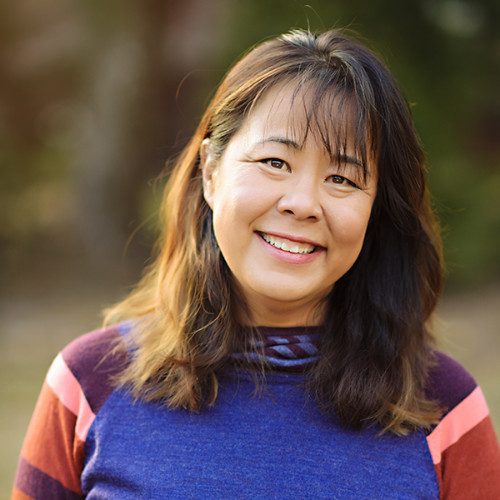
Portrait of Devaki Murch
Devaki Murch
Devaki Murch
Founder & Executive Director · StoryScope Studio

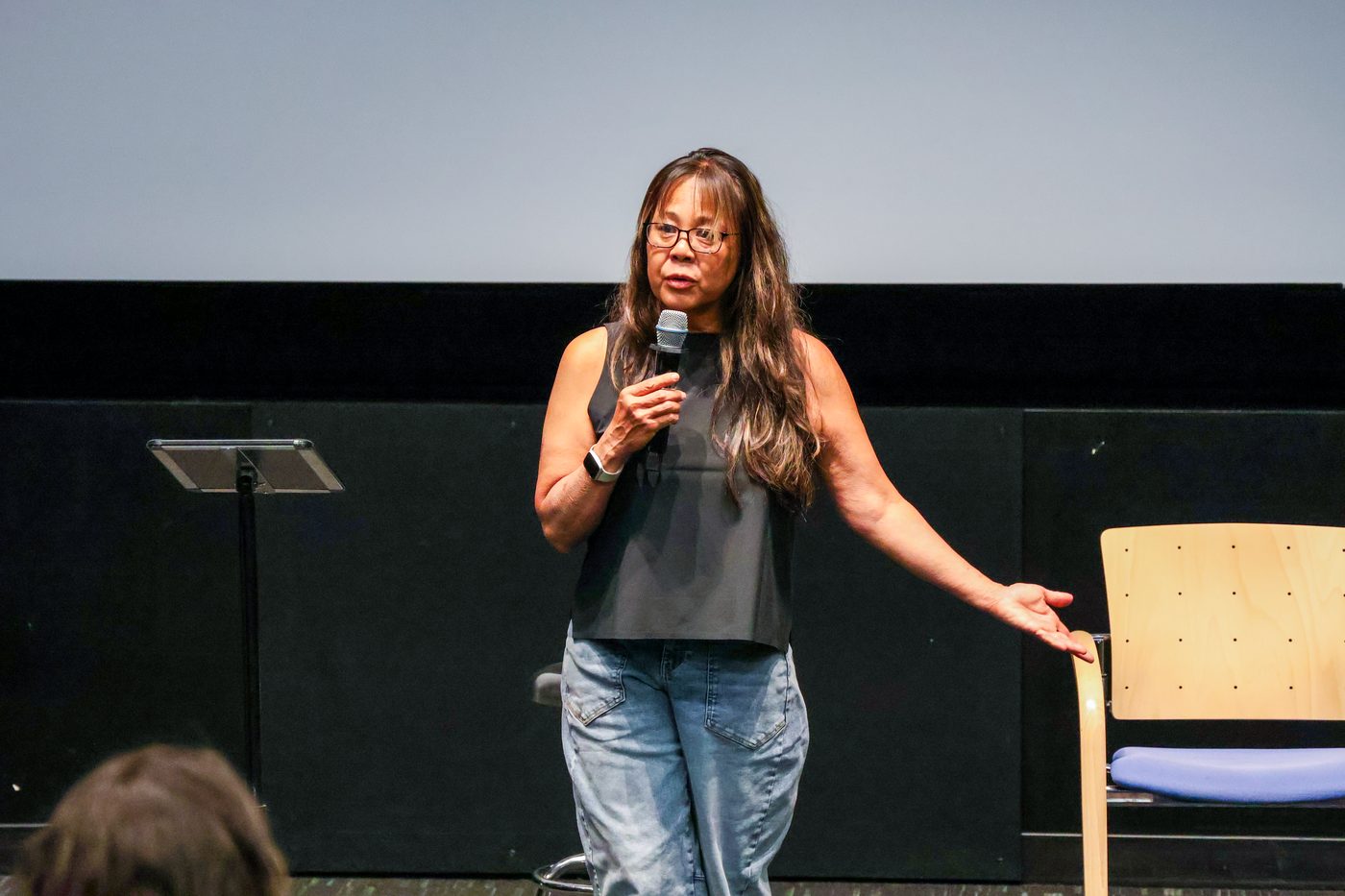
Devaki Murch is an Operation Babylift adoptee, a survivor of the April 4, 1975 C-5A Galaxy crash, and the steward of the Operation Babylift Collection. Her Vietnamese birth name is Nguyễn Thị Mỹ Phượng. The 鳳 mark that runs through this work is the Phượng of that name.

She did not set out to build an archive. The archive found her. When it did, every path she had ever followed connected to every other one.
The Origin

The Archives Found Me

In 2024, Sister Mary Nelle Gage, the last surviving leader of Friends For All Children, the agency through which Devaki was adopted, entrusted her with 33 boxes of original records spanning 1962 to 1975. She did not send them to a university. She did not send them to a government archive. She sent them to one of the children. Her directive was simple.

"Connect as many adoptees as you can."

In Hawaiian, where Devaki grew up, this is kuleana: a responsibility entrusted to you, to carry forward with care. The boxes held more than 4,800 individual documents, photographs, letters, and case files. Together they form the most complete surviving record of the 1975 Vietnamese child evacuation in private hands, and they had been kept, box by box, for fifty years, by one person.

A Personal Story

Born in One Country, Landed in Another

Devaki grew up on Kauaʻi, shaped by an island where identity is layered in tradition, where history is carried in the mind, body, and spirit, and where the ocean connects you to everywhere else at once. She had been born in one country and landed in another. Her history was written in headlines and told by voices on the news. None of it was hers.

She was nine months old on April 4, 1975, when the first Operation Babylift flight went down thirty-eight miles from Saigon. Of the people aboard, many did not survive. Devaki did. The person she is today is not the person who was carried off that aircraft, and she cannot go back to ask her.

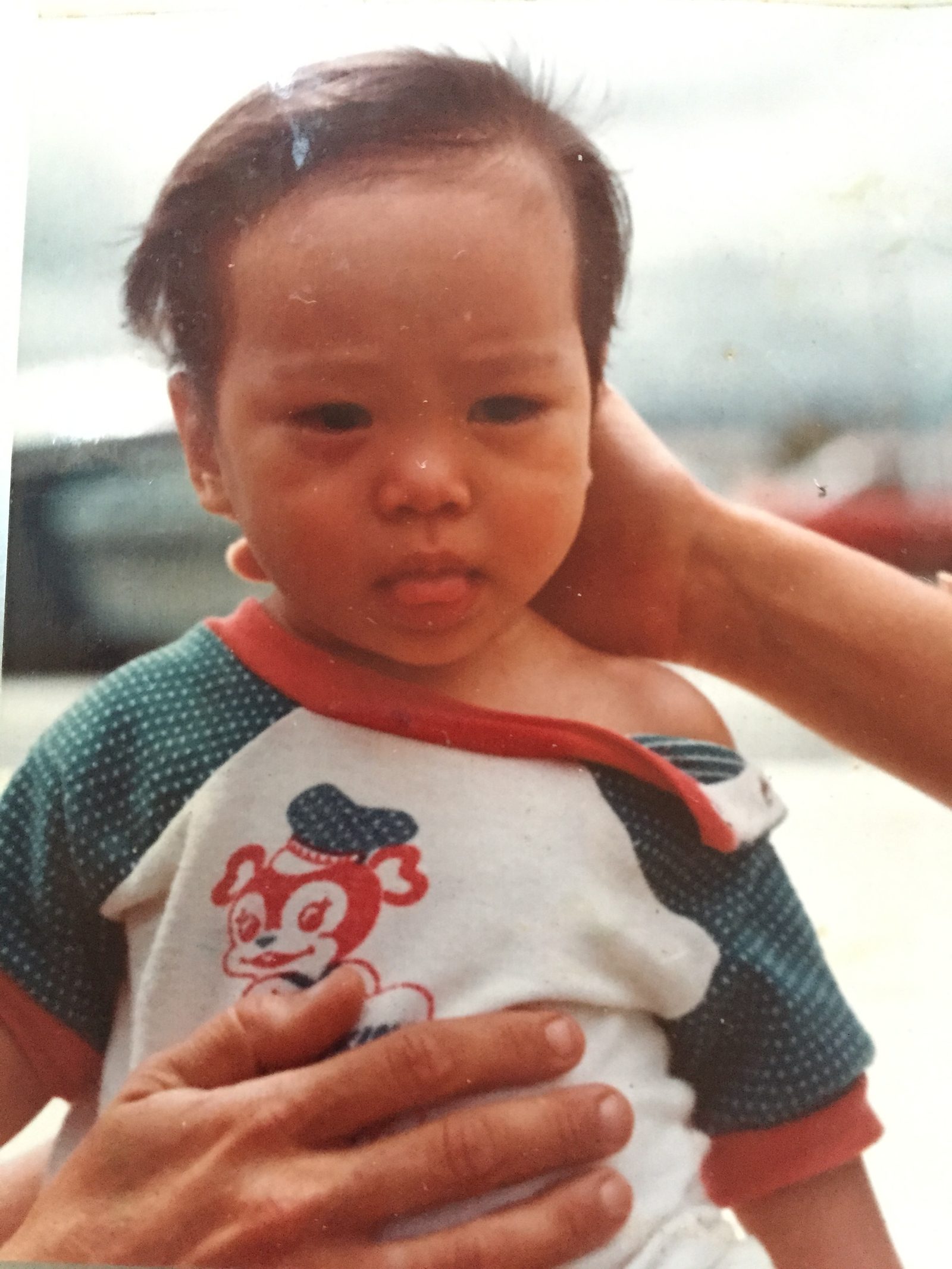
Devaki as an infant, held in someone's arms, wearing a white and red shirt
Devaki on arrival at the Presidio, San Francisco, April 1975.
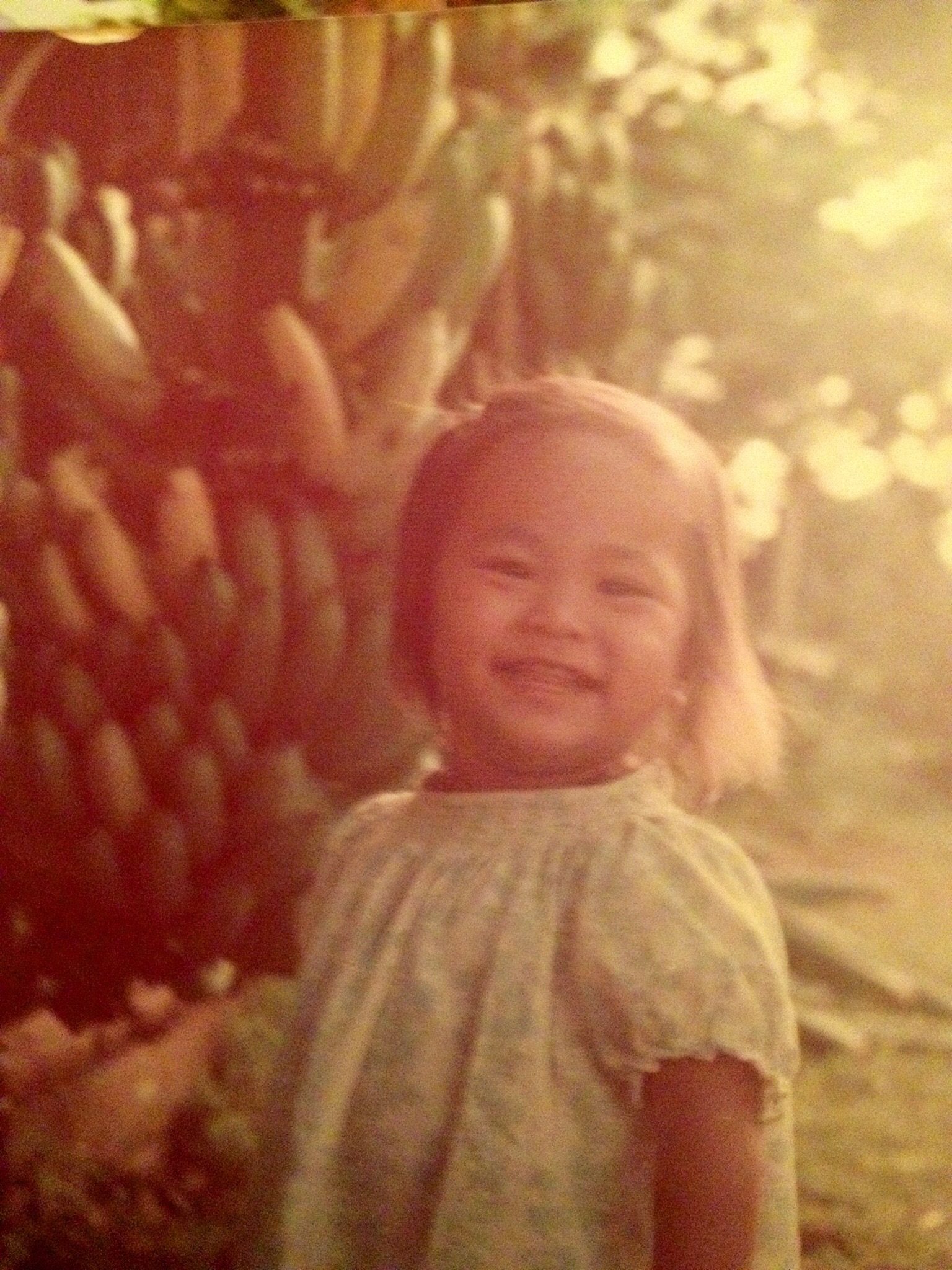
Devaki as a young child, smiling, in soft golden light
Devaki at home on Ananda Farm, Kauaʻi, Hawaiʻi, 1976.

For twenty years in the outdoor industry, every time she checked a hang tag that read Made in Vietnam, she said the same thing: Made in Vietnam. Just like me. It was a joke, kind of. But if you looked closer, it was a door, with a hang tag on it. Then the archives opened it.

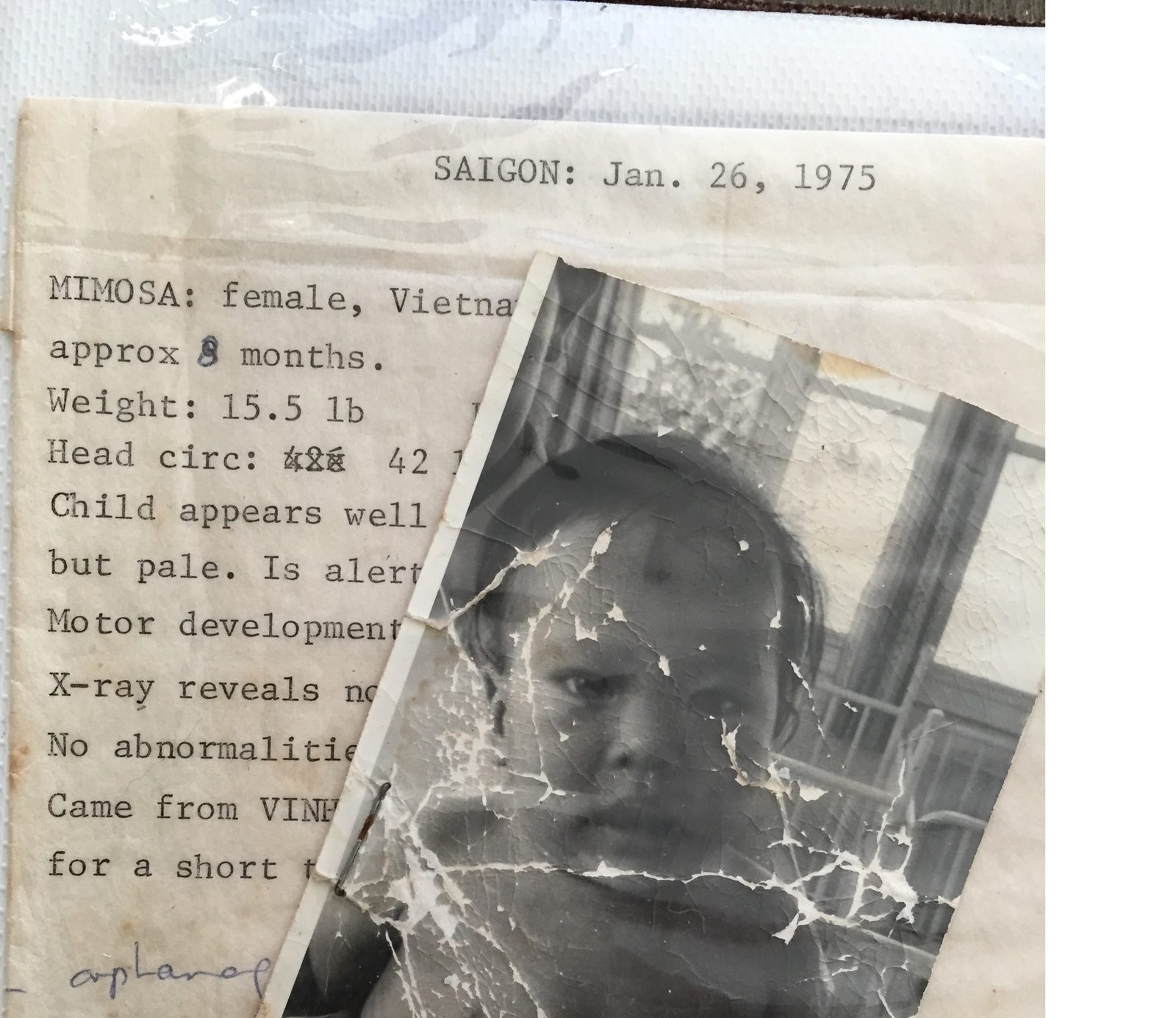
A 1975 Saigon intake record for a child coded Mimosa, paired with a cracked black-and-white photograph
"Mimosa" — Devaki at Tô Ấm nursery, January 1975.

Among the records is an intake card from Saigon, dated January 26, 1975. It describes a female child, approximately eight months old, fifteen and a half pounds, alert. A name is typed at the top: Mimosa.

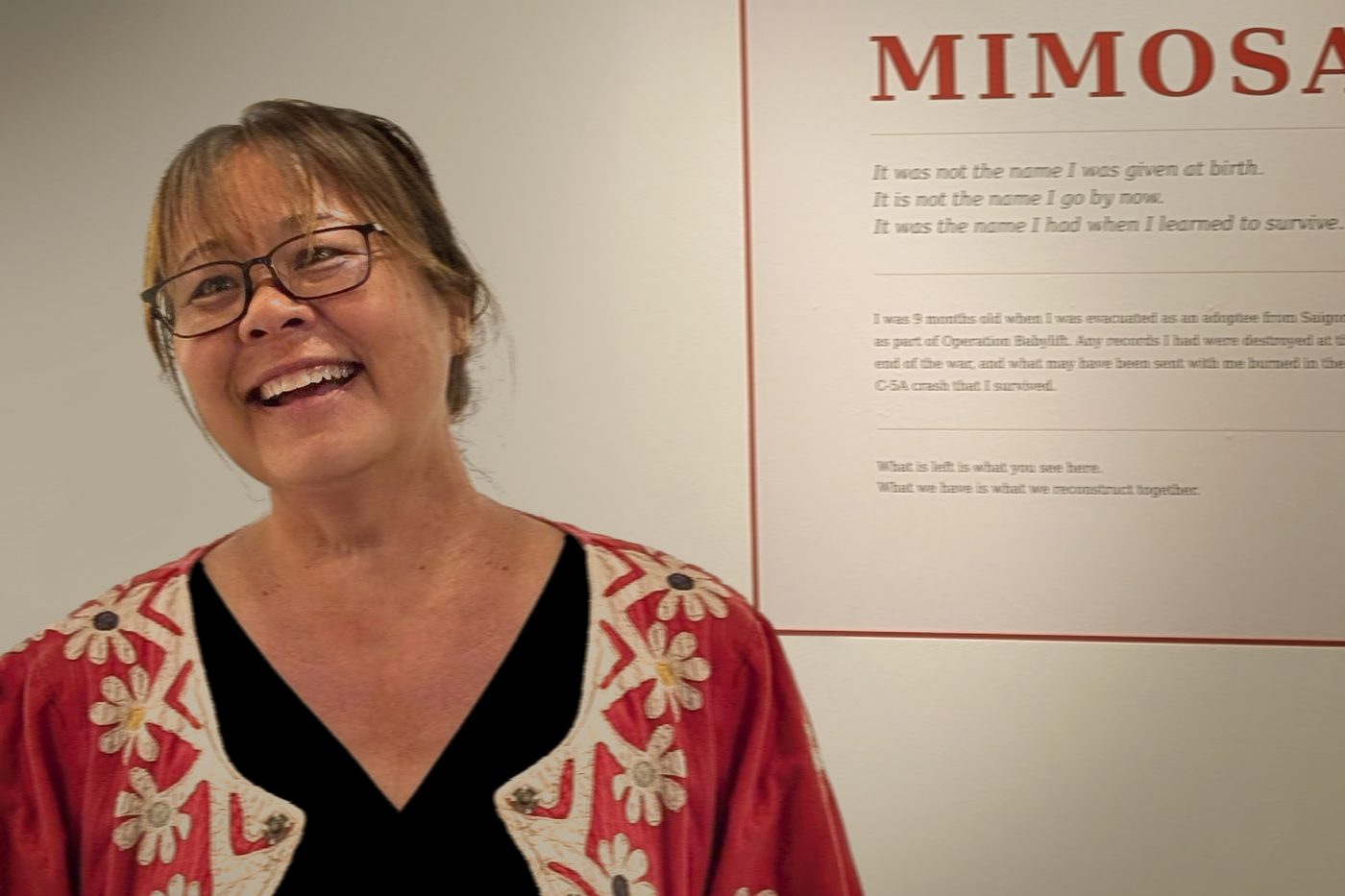
The moment a document becomes a mirror, and a person recognizes themselves in history for the first time, is the space where this work lives. My Name Is Mimosa began there.

The Goals

What This Work Is For

01

Archive Processing & Record Management

Process and digitize fragile originals through Love Ethic Archival Practice (LEAP), and secure a permanent institutional home before the records deteriorate further.

02

Adoptee Connections

Return original files to the people they document, and respond to the generation now coming forward to search.

03

Community Development

Build the relational network across all seven streams of Vietnamese displacement, and record the voices of caregivers while there is still time.

04

Presentation & Exhibit Curation

Surface what has long been invisible through exhibitions, the Children of War StoryDeck, author talks, and public programming.

The Methodology

Love Ethic Archival Practice

Most archives process records as objects. LEAP processes them as relationships. It is a trauma-informed, community-centered framework grounded in bell hooks's principles of love and the Hawaiian cultural values Devaki was raised with: Mālama, Kuleana, Pilina, Aloha ʻāina, Naʻau.

The methodology was built from eighteen months of field practice with the Operation Babylift Collection. Its premise is a posture, not a technique: the archive exists to serve the people it was created about, not the institutions that hold it. It connects the official record, the public record, the personal history, and the shared history, four things that have rarely been in the same space before.

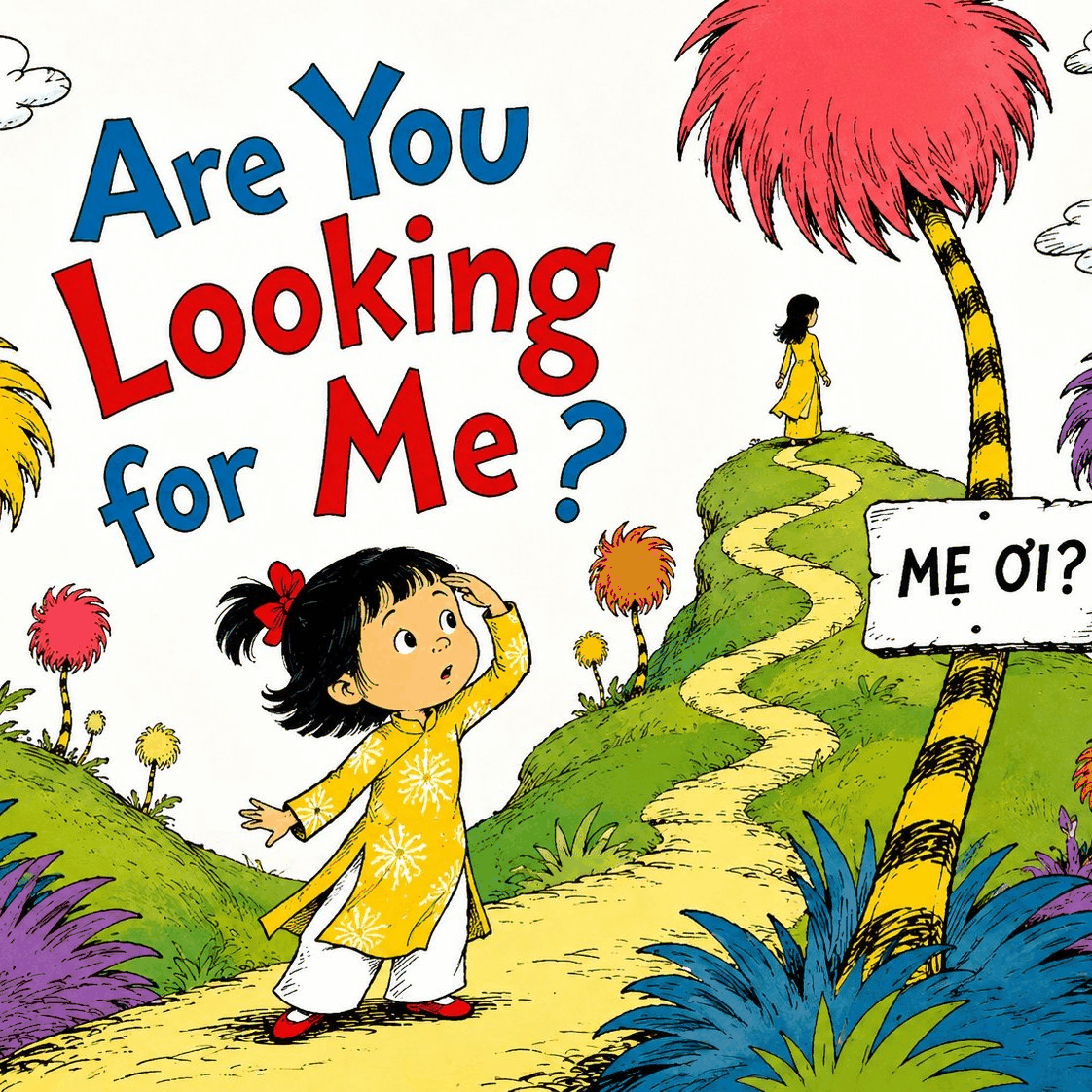
Illustration of a child in an ao dai looking up a winding path toward a figure, with a sign reading 'Me oi?'
"Mẹ ơi?" — the question at the center of Made in Vietnam.
The Vietnam Trip

Made in Vietnam

In 2026, the work returned to Vietnam. Not to find anything specific, but to follow the path all the way to its source and see what it looks like from the other side of the mirror. What happens when the variables stop being historical abstractions and become geography you can stand in.

The Made in Vietnam fieldwork carries the Children of War StoryDeck through Ho Chi Minh City, the Mekong Delta, Da Nang, and Hanoi: National Archives II, Tu Du Hospital, provincial courts, the orphanages named in the files, and the places the records came from. It is origins research and archival fieldwork at once, gathering what the boxes could only point toward.

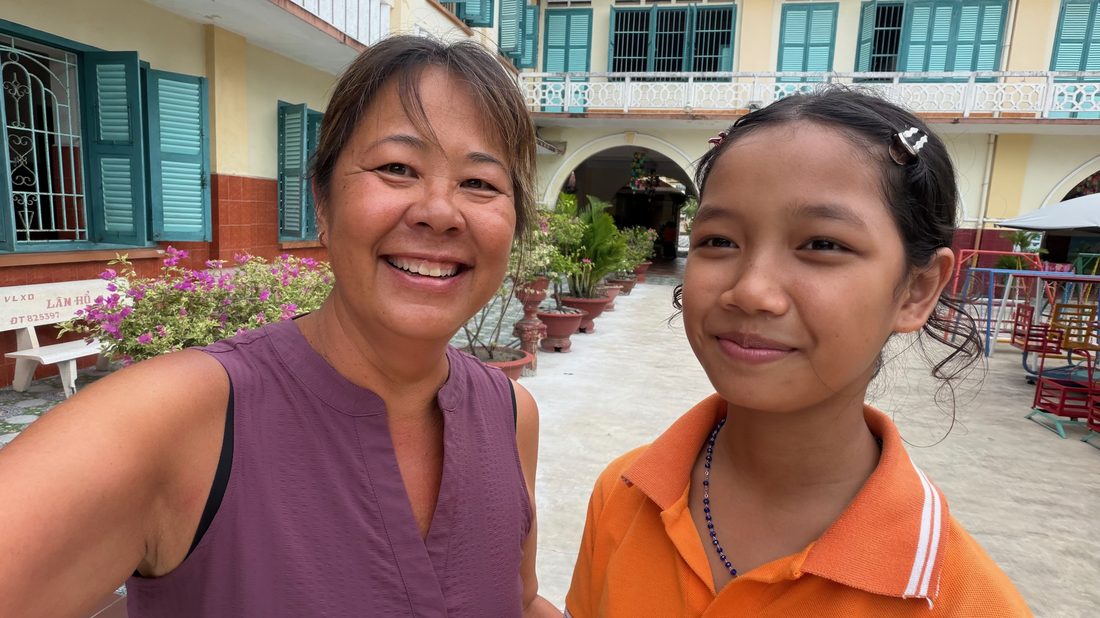
Devaki with a young girl in an orphanage courtyard in Vietnam
Children's Center in Cần Thơ, Vietnam, May 2026.
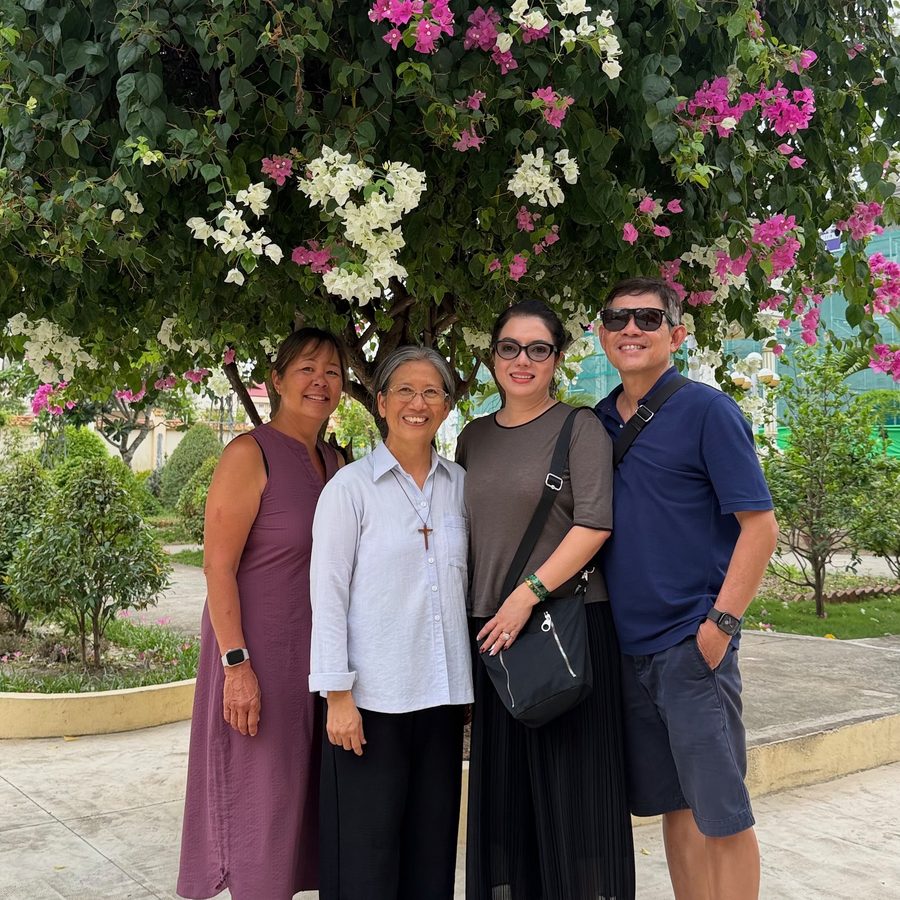
Devaki with a Vietnamese sister and two others standing beneath a flowering bougainvillea tree
Cần Thơ, Vietnam, May 2026.
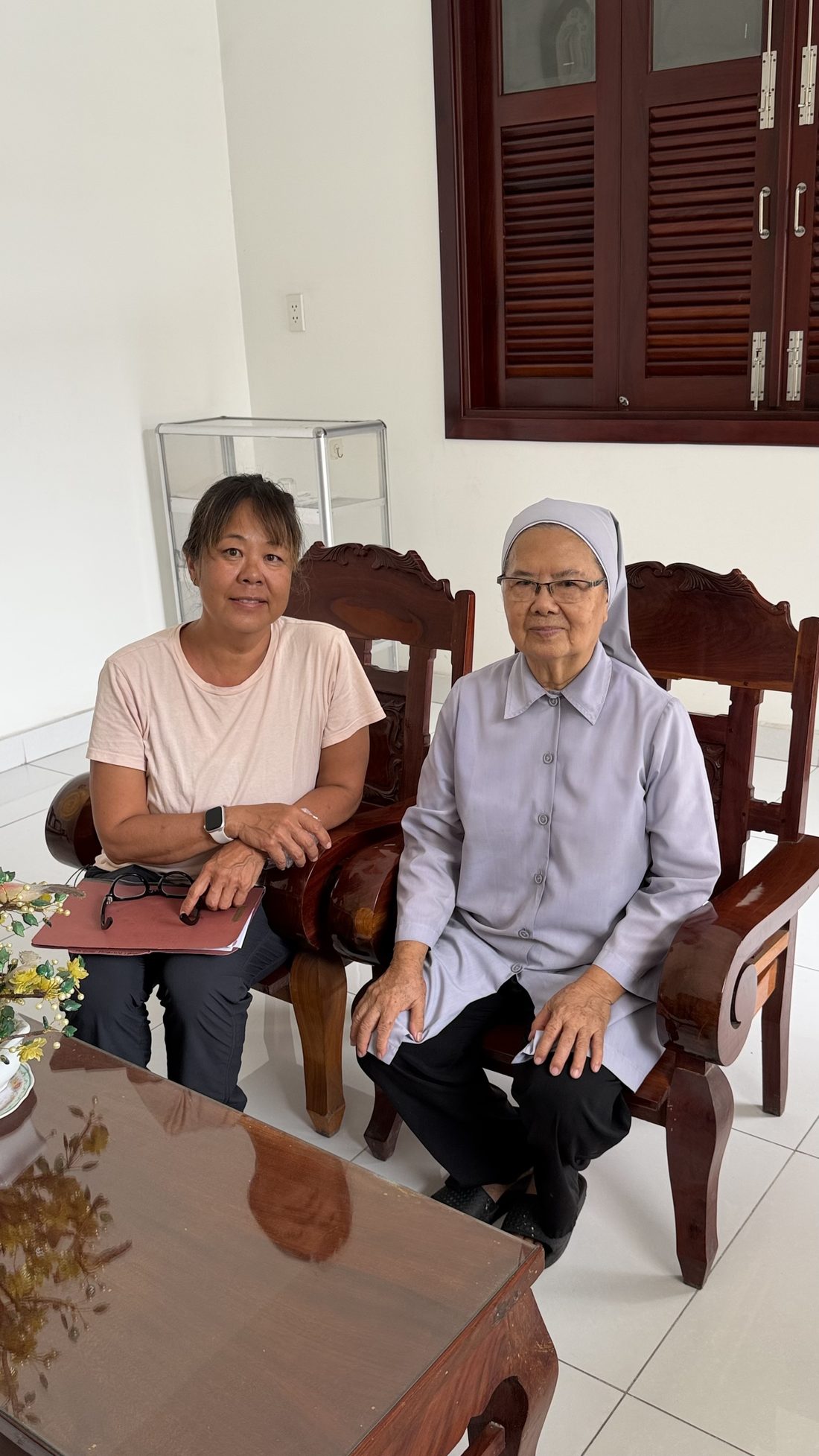
Devaki seated beside an elderly Vietnamese sister during a fieldwork visit
Sóc Trăng, Vietnam, May 2026.
The Spine of the Story

A Name, Carried Forward

The Secret Ability to FlyOperation Babylift CollectionArchives in Love and WarMy Name Is MimosaThe Fine Print of BelongingMade in Vietnam鳳 Phượng

Be Part of This Record

However you connect to this history, whatever stage you are at, there is a place for you here.

Connect with the Archive Support the Work